end the epidemics of AIDS, tuberculosis, malaria and neglected tropical diseases and combat hepatitis, water-borne diseases and other communicable diseases.”
United Nations, 2015
the yellow ones = our 4 diseases
Why it matters
2.4M+
people died in one year from four diseases we already know how to treat.
Mostly in Africa and South Asia. Many are children.
All treatable.
Deaths in one year (2024 / 2025)
Tuberculosis — 1,230,000
Malaria — 610,000
HIV/AIDS — 570,000
Cholera — 7,870
tiny bar, but the highest since 1999!
that’s about 1 person every 13 seconds
Sources: WHO (2025c, 2025d, 2026c); UNAIDS (2026)
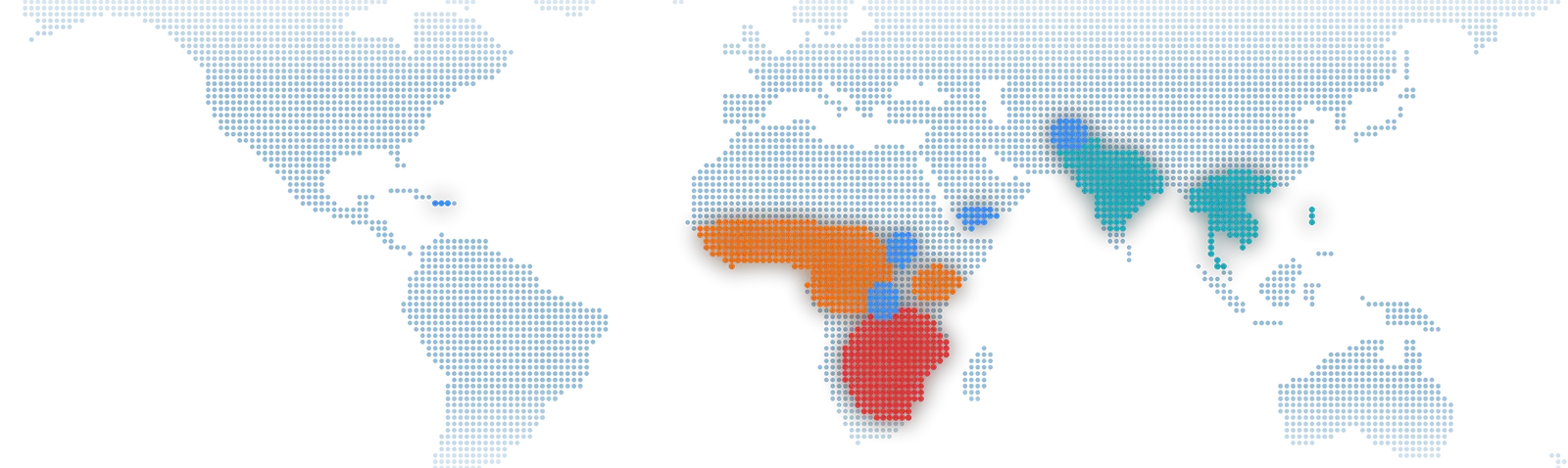
WHERE DO THEY HIT HARDEST?
areas are simplified!
1
2
3
4
1 MALARIA
Sub-Saharan Africa
Warm, wet climate · few nets, tests and vaccines · poverty and weak care
2 HIV/AIDS
Eastern & Southern Africa
Early, fast spread · poverty and inequality · gaps in testing and ART
3 TUBERCULOSIS
South & Southeast Asia
Crowded homes and cities · poverty and malnutrition · unfinished treatment
4 CHOLERA
Africa, Yemen, Afghanistan, Haiti
No safe water or toilets · war and displacement · floods and storms
Sources: WHO (2025a, 2025c, 2025d, 2026c); UNAIDS (2026)
presented by Emir
MALARIA
610,000
deaths in 2024 (WHO, 2025d)
WHY?
the causes
01
Lack of vaccines: very new, only in 17 countries
02
Poor care for pregnant women
03
Lack of education: no bed nets, still water stays
SO WHAT?
the effects
01
Child deaths: 3 in 4 are under age 5
02
Mothers & babies at risk: anaemia, low birth weight
03
Faster spread: 282 million cases in 2024
Source: WHO (2025d)
presented by Alperen
HIV/AIDS
570,000
deaths in 2025 (UNAIDS, 2026)
WHY?
the causes
01
Unawareness: many infected people don’t know
02
Passed from mother to child
03
No access to treatment, and the virus mutates fast
SO WHAT?
the effects
01
Relationships hurt by fear and stigma
02
Physical & mental health problems
03
Huge pressure on healthcare systems
Sources: UNAIDS (2025, 2026); WHO (2026b)
presented by Ege
TB
tuberculosis
1.23 M
deaths in 2024 (WHO, 2025c)
WHY?
the causes
01
Poor access to healthcare & vaccines
02
Close contact: TB spreads through the air
03
Incomplete treatment: people stop the pills early
SO WHAT?
the effects
01
Serious breathing problems
02
Weight loss & weakness: can’t work or study
03
Death in severe or untreated cases
Source: WHO (2025c)
presented by Omer
CHOLERA
7,870
deaths in 2025, highest since 1999
WHY?
the causes
01
No safe drinking water
02
Poor sanitation: no toilets, no sewage
03
Wars and floods break the water systems
SO WHAT?
the effects
01
Severe dehydration from strong diarrhoea
02
Can kill within hours if untreated
03
Hospitals overwhelmed in big outbreaks
Sources: WHO (2025a, 2025b, 2026a, 2026c)
OUR SOLUTIONS
one for each disease
01 · MALARIA
Rwanda Community Health Workers
Rwanda Ministry of Health
— Emir
02 · HIV/AIDS
UNAIDS 95-95-95 Targets
UNAIDS, worldwide
— Alperen
03 · TUBERCULOSIS
PAN-TB Project
drug companies + non-profits
— Ege
04 · CHOLERA
Global Roadmap to 2030
GTFCC, led by WHO
— Omer
next: we compare them on effectiveness, geographic reach & capacity building
Solution 1 · Malaria · Rwanda
presented by Emir
The hospital comes to the village.
RWANDA’S COMMUNITY HEALTH WORKERS
TEST
rapid test at home
TREAT
medicine right away
PROTECT
bed nets for families
58,000
trained volunteers
3
elected in every village
1995
when it started
Malaria cases in Rwanda
5.0 M
2017
0.6 M
2023
0.8 M
2024
–88% by 2023!
…but up again in 2024
600
51
malaria deaths in Rwanda, from 2017 to 2023
59%
of cases are treated right in the village
Sources: Exemplars in Global Health (n.d.); Severe Malaria Observatory (n.d.); Xinhua (2024); KT Press (2024); The New Times (2025)
Solution 2 · HIV/AIDS · Worldwide
presented by Alperen
UNAIDS 95-95-95
Three targets for 2030, set in 2014.
ART = daily medicine against HIV suppressed = can’t pass it on
95%
know their HIV status
2016: 70% · 2025: 88%
95%
are on treatment (ART)
2016: 53% · 2025: 78%
95%
have the virus suppressed
2016: 44% · 2025: 74%
striped = 2016 · red = growth to 2025 · line = 95% goal
–57% AIDS DEATHS
since 2010
7 COUNTRIES
already reached all three
Sources: UNAIDS (2014, 2017, 2025, 2026)
Solution 3 · Tuberculosis · Science
presented by Ege
PAN-TB PROJECT
One set of drugs for every kind of TB, in 3 months instead of 6.
STILL IN PHASE 2
impact expected, not proven yet
2020
launched by GSK, J&J, Otsuka, TB Alliance & Gates MRI
2023
Phase 2 trial in South Africa, Philippines & Peru
2024
trial stopped early: the drugs were too slow
NOW
testing new drug combinations
8
29
TB drugs being tested: 2015 vs 2025
Sources: GSK (2020); Gates MRI (2022, n.d.); Treatment Action Group (2025); WHO (2025c)
Solution 4 · Cholera · 47 countries
presented by Omer
CHOLERA ROADMAP 2030
A global plan by the GTFCC (50+ partners, led by WHO). Goal: 90% fewer deaths.
1
Every country writes a national cholera plan
2
Clean water and toilets in the hotspots
3
A vaccine you drink: the oral cholera vaccine
Cholera deaths reported to WHO
4,000
6,000
7,870
2023
2024
2025
going the WRONG way
21
national cholera plans
100M+
vaccine doses shipped since 2022
the tools are stronger… but the roadmap isn’t winning yet
Sources: GTFCC (2017, 2025); WHO (2025b, 2026a, 2026c)
HOW DO THEY COMPARE?
3 criteria (chosen from 8)
RWANDA CHWs
UNAIDS 95-95-95
PAN-TB
CHOLERA ROADMAP
Effectiveness
Deaths 600 to 51
Deaths –57%
Not proven yet
Deaths rising
Geographic reach
1 country
Worldwide
3 countries
47 countries
Capacity building
58,000 trained
National systems
Few scientists
21 national plans
dots = our own rating · circled = best in that row
Sources: Xinhua (2024); UNAIDS (2014, 2026); TAG (2025); WHO (2026c); Gates MRI (n.d.); GTFCC (2017, 2025)
AND THE WINNERS ARE...
MOST EFFECTIVE
Rwanda Community Health Workers
WIDEST REACH
UNAIDS 95-95-95
BEST CAPACITY BUILDING
Rwanda Community Health Workers
Rwanda wins twice!
Sources: Xinhua (2024); UNAIDS (2025); Severe Malaria Observatory (n.d.)
To sum up
Rwanda: local people can beat a disease
UNAIDS: clear global targets save lives
PAN-TB: science takes time
Cholera: a plan needs water, peace & money
WE HAVE THE TOOLS.
Now bring them to the last village.
Thank you! Questions?
SOURCES
(1/3)
Bill & Melinda Gates Medical Research Institute. (2022, August 17). PAN-TB collaboration to advance investigational tuberculosis drug regimens to phase 2 clinical trials [Press release]. https://www.gatesmri.org/wp-content/uploads/2022/08/PAN-TB-JDA-Press-Release-August-17-2022.pdf
Bill & Melinda Gates Medical Research Institute. (n.d.). Overview of PAN-TB Ph 2b/c treatment shortening trial. https://www.gatesmri.org/overview-of-pan-tb-ph-2b-c-treatment-shortening-trial
Exemplars in Global Health. (n.d.). How did Rwanda implement? https://www.exemplars.health/topics/under-five-mortality/rwanda/how-did-rwanda-implement
Global Task Force on Cholera Control. (2017). Ending cholera: A global roadmap to 2030. World Health Organization. https://www.gtfcc.org/wp-content/uploads/2020/09/ending-cholera-a-global-roadmap-to-2030.pdf
Global Task Force on Cholera Control. (2025). GTFCC progress report (January 2022 to December 2024): Executive summary. https://www.gtfcc.org/wp-content/uploads/2025/03/gtfcc-progress-report-2022-2024-executive-summary.pdf
GSK. (2020, February 27). First-of-its-kind global collaboration launched to develop transformative treatment regimens for tuberculosis [Press release]. https://www.gsk.com/en-gb/media/press-releases/first-of-its-kind-global-collaboration-launched-to-develop-transformative-treatment-regimens-for-tuberculosis/
KT Press. (2024, April 20). How community health workers contributed to Rwanda's efforts to eradicate malaria. https://www.ktpress.rw/2024/04/how-community-health-workers-contributed-to-rwandas-efforts-to-eradicate-malaria/
Severe Malaria Observatory. (n.d.). Rwanda: Community-based management of malaria. https://www.severemalaria.org/countries/rwanda/rwanda-community-based-management-malaria
APA 7 style · shown during Q&A
SOURCES
(2/3)
The New Times. (2025, June 24). Rwanda's new malaria control strategy detects 30% more unreported cases. AllAfrica. https://allafrica.com/stories/202506240060.html
UNAIDS. (2014). Fast-Track: Ending the AIDS epidemic by 2030. https://www.unaids.org/resources/documents/2014/JC2686_WAD2014report
UNAIDS. (2017). What's the difference? Understanding measures of progress towards 90-90-90. https://www.unaids.org/sites/default/files/measures-progress-90-90-90.pdf
UNAIDS. (2025). 2025 global AIDS update: AIDS, crisis and the power to transform. https://unaids.org/en/resources/documents/2025/2025-global-aids-update
UNAIDS. (2026). Global HIV & AIDS statistics: Fact sheet 2026. https://www.unaids.org/sites/default/files/2026-07/2026_UNAIDS_Global_HIV_Factsheet_en.pdf
United Nations. (2015). Transforming our world: The 2030 Agenda for Sustainable Development (A/RES/70/1). https://sdgs.un.org/2030agenda
World Health Organization. (2025a, September 12). Cholera kills more people for second consecutive year while prevention and treatment available [News release]. https://www.who.int/news/item/12-09-2025-cholera-kills-more-people-for-second-consecutive-year-while-prevention-and-treatment-available
APA 7 style · shown during Q&A
SOURCES
(3/3)
World Health Organization. (2025b). Global situation report for cholera, 2024. Weekly Epidemiological Record, 100(36), 347-364. https://www.who.int/publications/i/item/who-wer10036-347-364
World Health Organization. (2025c). Global tuberculosis report 2025. https://www.who.int/teams/global-tuberculosis-programme/tb-reports/global-tuberculosis-report-2025
World Health Organization. (2025d). World malaria report 2025. https://www.who.int/teams/global-malaria-programme/reports/world-malaria-report-2025
World Health Organization. (2026a). Cholera [Fact sheet]. https://www.who.int/news-room/fact-sheets/detail/cholera
World Health Organization. (2026b, July 27). HIV and AIDS [Fact sheet]. https://www.who.int/news-room/fact-sheets/detail/hiv-aids
World Health Organization. (2026c, September 29). WHO reports latest global trends in cholera, meningitis and plague [News release]. https://www.who.int/news/item/29-09-2026-who-reports-latest-global-trends-in-cholera--meningitis-and-plague
Xinhua. (2024, April 26). Rwanda reduces malaria cases by 88 pct in 7 years: Official. The Star. https://www.thestar.com.my/news/world/2024/04/26/rwanda-reduces-malaria-cases-by-88-pct-in-7-years-official